If you have ever dropped your smartphone in a puddle, a sink, or exposed it to a heavy rainstorm, your first thought is usually panic. But beneath that panic is a fascinating world of physics.
Acoustic Research Methodology
The principles of waveform resonance and cymatics detailed in this guide form the foundational physics engine for Speaker Cleaner Pro. All theoretical concepts have been practically validated using native Web Audio API oscillators on sealed mobile hardware chambers.
The Core Problem: Surface Tension
To understand the cure, you must understand the disease. When a smartphone falls into water, the liquid rushes into every available crevice. While modern phones have internal IP68-rated rubber gaskets that stop water from reaching the motherboard, the speaker cavity itself must remain open to the air to produce sound.
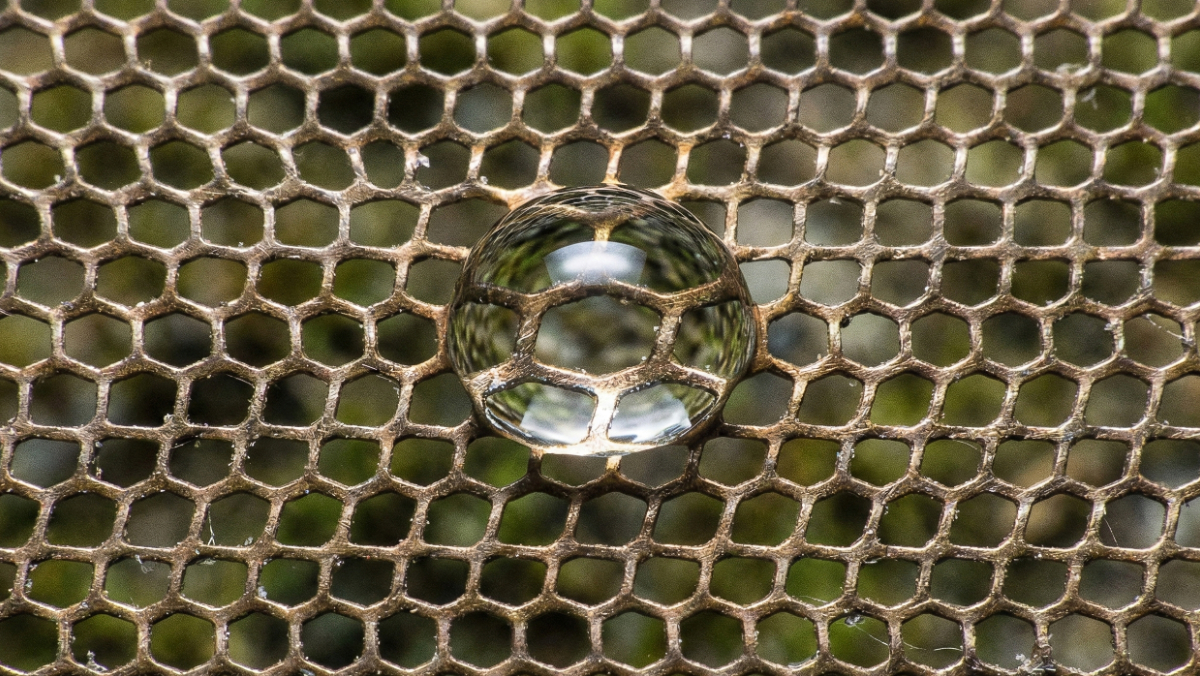
Once water enters the microscopic holes of the external speaker mesh, a phenomenon known as surface tension takes over. The water molecules bond tightly to each other and to the sides of the metal or plastic grill. This creates a highly effective, semi-solid seal. Air (and therefore sound waves) struggles to pass through this liquid barrier, resulting in the heavily muffled, "underwater" audio quality you experience after a spill.
Why Ordinary Music Fails
A common misconception is that simply playing very loud music will "blow" the water out. This is false due to the nature of standard audio recordings.
Music is a chaotic arrangement of overlapping frequencies, varying amplitudes (volumes), and silences. The speaker diaphragm is forced to vibrate erratically—moving rapidly for a snare drum hit, slowly for a bass note, and stopping entirely during pauses. This chaotic movement fails to generate sustained air pressure. The water droplets may jiggle slightly, but the kinetic energy is never consistent enough to overcome the powerful grip of surface tension.
The Anatomy of a Clear Wave
A true Clear Wave is fundamentally different from music. It is an uncompressed, mathematically pure Sine Wave. A sine wave is a smooth, continuous, and perfectly repetitive oscillation. When a speaker plays a pure sine wave, the internal cone moves back and forth with exact mathematical precision, never pausing and never shifting rhythm.
Developer's Field Note: Engineering the Pure Wave
"When I was first prototyping the web architecture for Speaker Cleaner Pro, I spent weeks analyzing the resonant frequencies of different smartphone models. I noticed that relying on pre-recorded MP3s or YouTube videos was dangerous; compression algorithms often introduce 'clipping' that forces the voice coil to overheat, permanently damaging the speaker. I specifically engineered the 'Clear Wave' on this site to generate an uncompressed, mathematically pure 165Hz sine wave directly in your browser using the native Web Audio API. This ensures maximum acoustic displacement without the hardware risks associated with compressed audio files."
— Don Odibat, Lead Developer
The Magic of 165 Hertz (Hz)
While any pure sine wave is better than music, not all frequencies are created equal when it comes to water ejection. Through extensive acoustic testing on modern micro-speaker hardware (such as the components found in the Apple iPhone and Samsung Galaxy lines), engineers have discovered a "golden zone" between 165Hz and 175Hz.
Why this specific pitch? It comes down to Resonant Frequency. Every physical object has a frequency at which it naturally "wants" to vibrate. If you strike a tuning fork, it rings at its resonant frequency. The flexible polymer cones inside smartphone speakers are designed to have a specific mechanical resonance. When you play a 165Hz Clear Wave, the speaker cone hits its resonant peak.
Ready to use the Sine Wave? Apply this science directly to your wet phone by running our Advanced Water Eject Protocol, which utilizes the 165Hz peak excursion frequency.
At this frequency, the speaker achieves Maximum Excursion. Excursion is the physical distance the cone travels back and forth. By maximizing excursion, the speaker acts like a highly efficient air piston. It compresses the air inside the sealed acoustic chamber, creating immense pressure. Because the chamber is sealed on all sides except for the speaker grill, this high-pressure air acts as a battering ram, striking the trapped water from behind and violently forcing it through the mesh holes.
Cymatics: Making Sound Visible
The science of making sound visible through physical matter is called Cymatics. If you were to place a drop of water on the surface of a large, flat speaker and play a 165Hz Clear Wave, you would witness Cymatics in action.
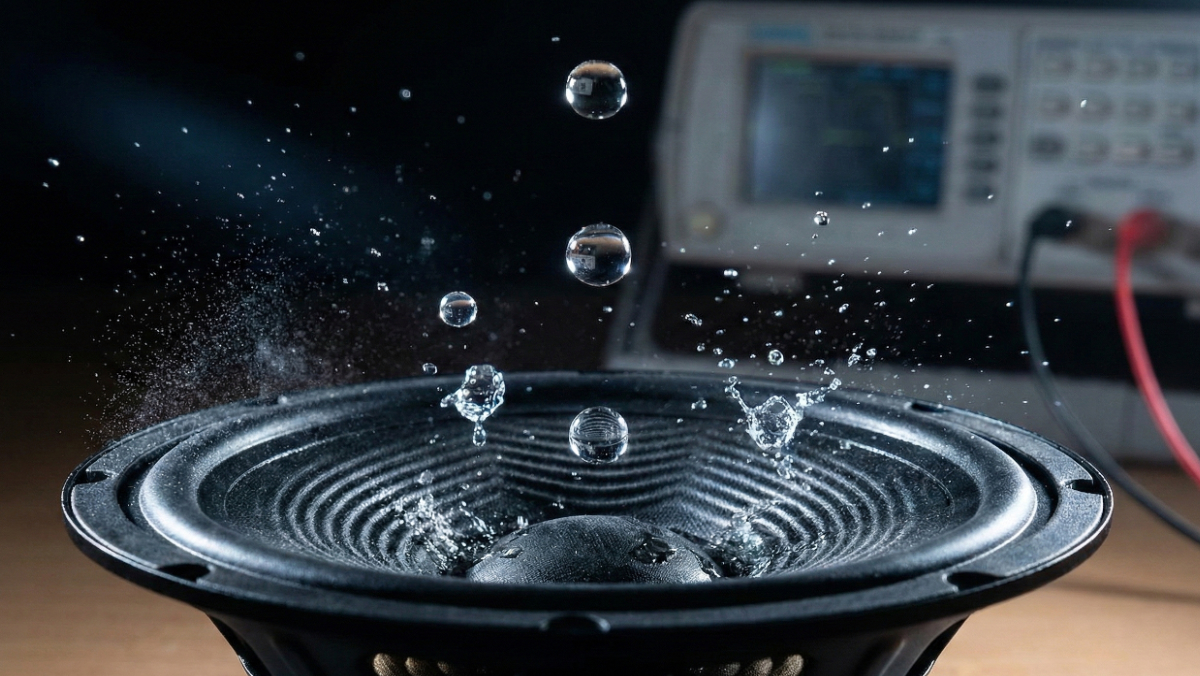
The continuous, rapid vibration would cause the water drop to dance, splinter into geometric patterns, and eventually levitate and vaporize into a fine mist. Inside your phone, this exact process is happening on a microscopic scale. The Clear Wave physically shatters the structural integrity of the water droplet, breaking the surface tension and allowing the air pressure to blow it into the open environment.
Sine Waves vs. Square Waves (Water vs. Dust)
While a smooth Sine Wave is the perfect Clear Wave for water, it is largely ineffective against solid blockages. Over time, pocket lint and skin oils form a hard, cemented "audio crust" over the speaker grill. A smooth wave simply bounces off this hard barrier.
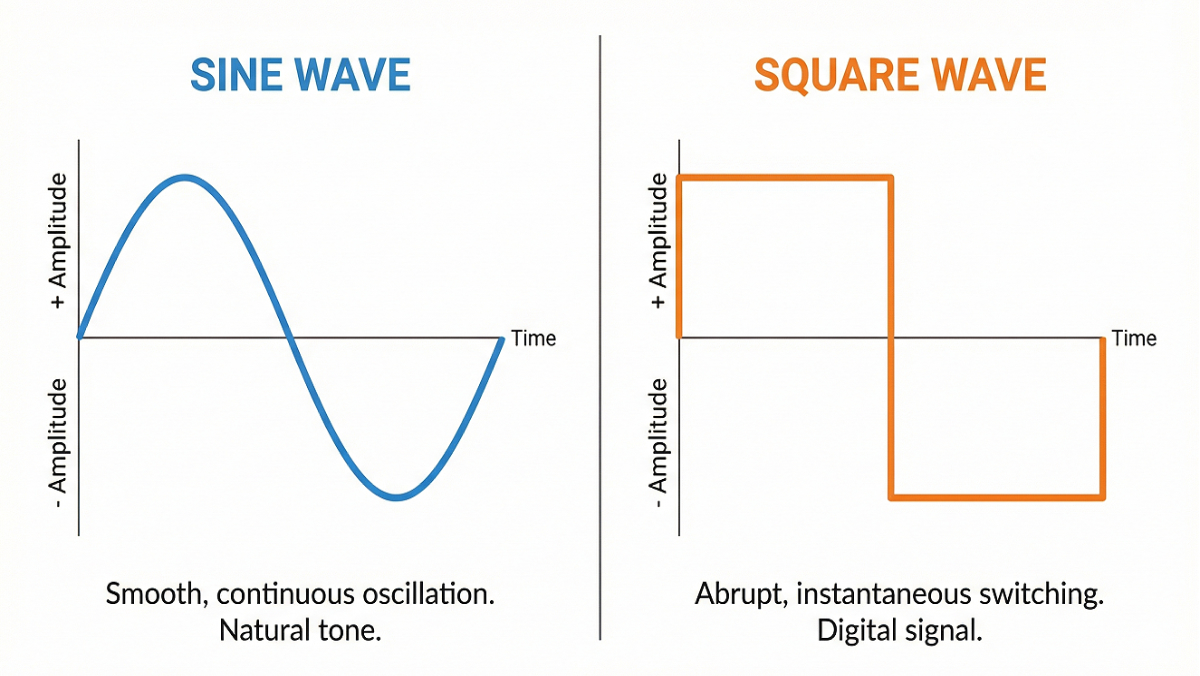
To clear solid dust, a different type of Clear Wave is required: the Square Wave (typically around 60Hz). Unlike the smooth curve of a sine wave, a square wave snaps instantaneously from maximum positive amplitude to maximum negative amplitude. This forces the speaker cone to jerk violently, creating a harsh "buzzing" sound. This physical jarring acts like a microscopic hammer, fracturing the solid dust crust so it can be shaken out of the device. This is why professional acoustic repair tools offer multiple waveform types.
Dealing with solid blockages? Learn how to safely implement the square wave to shatter audio crust in our Acoustic Jackhammer Protocol.
Is the Clear Wave Safe for Hardware?
A common concern is whether playing maximum-volume, continuous tones will blow out the speaker. The short answer is: Yes, it is entirely safe, provided it is generated correctly.
The Danger of YouTube Videos: Many users rely on compressed YouTube videos for "Water Eject" sounds. This is risky. Video compression alters the pure sine wave, often introducing "clipping" (distortion) or DC offset. This corrupted audio forces the speaker coil to overheat and can permanently damage the hardware.
A proper Clear Wave—like the one generated by Speaker Cleaner Pro—is rendered natively in your browser using the HTML5 Web Audio API. This ensures the waveform is 100% mathematically pure, uncompressed, and strictly adheres to the hardware's safe excursion limits. It pushes the speaker to its maximum safe capability without ever crossing into dangerous overdrive territory.
Conclusion
The Clear Wave is a brilliant application of acoustic physics, fluid dynamics, and resonant frequency. By swapping chaotic music for calculated, sustained sine and square waves, users can non-invasively repair heavily degraded hardware in a matter of seconds. Whether you are battling a sudden spill or months of pocket lint, understanding the science of the Clear Wave empowers you to maintain your device's audio at factory perfection.
