PHONE SPEAKERCLEANER
⚠️ Critical Hardware Warning
Do NOT use this tool if your speaker is clogged with mud, wet concrete, or heavy sand. Acoustic vibration against solid, rock-like matter can physically tear the delicate speaker membrane.
Ask the localized AI anything about this tool, troubleshooting, or Don Systems.
> How can I assist you with your hardware today?
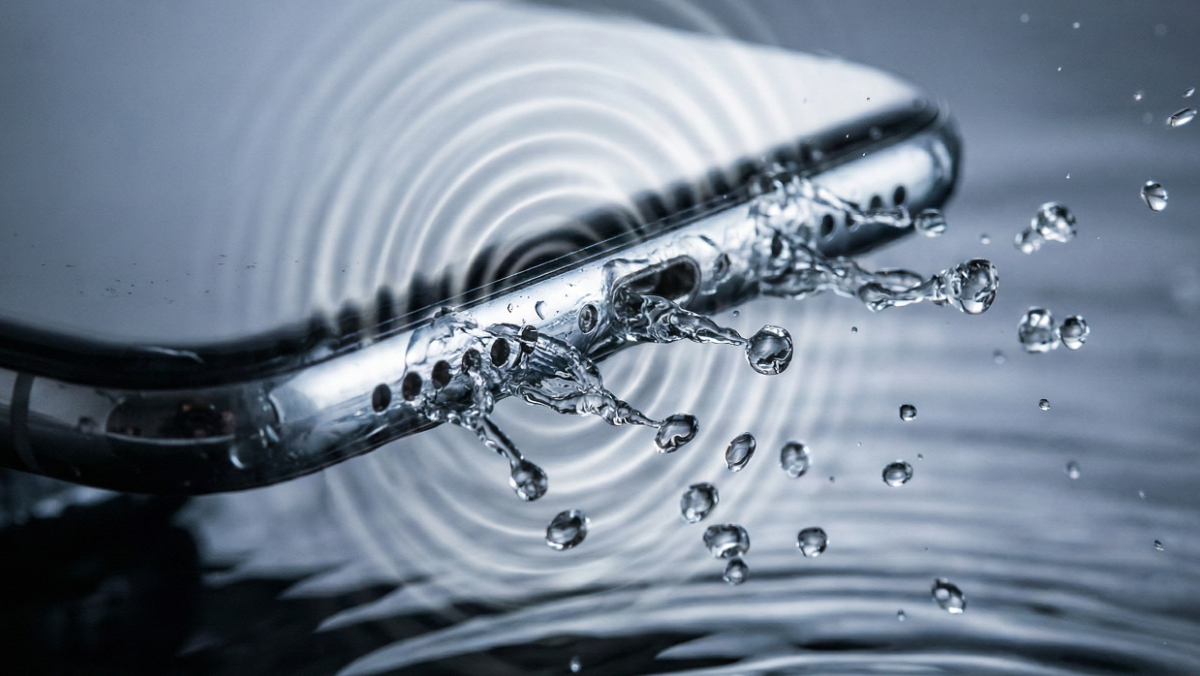
Phone Speaker Cleaner utilizes your browser's native HTML5 Web Audio API. This means the soundwaves are generated locally on your device's processor in real-time. We do not use highly-compressed, pre-recorded MP3 files that can cause digital clipping and harm your voice coil.
By relying on pure mathematical waveforms, the tool stays within the safe amplitude limits defined by your operating system's audio drivers.
Is this sound safe for my speakers?
Yes. We use specific sine waves (165Hz) designed to vibrate the speaker diaphragm without exceeding safe amplitude limits. It essentially 'shakes' the water off without damaging hardware.
How long should I run the cleaning cycle?
We recommend running "Pro Mode" (Auto Cycle) 2-3 times. If water is still trapped, position your phone upright and run it for 5 minutes.
Does this work for iPhone and Android?
Absolutely. It works on any device with a speaker, including iPhone, Samsung Galaxy, Pixel, Xiaomi, and even smartwatches.
What should I do if the sound is still muffled?
Wait 10 minutes for evaporation, then try again. Gravity helps—keep the speaker facing down while the sound plays.
Why can't I hear anything?
Your volume might be too low, or water has temporarily shorted the connection. Turn volume to max and run the 165Hz mode.
My phone fell in Salt Water (Ocean). What now?
CRITICAL: Salt creates corrosion instantly. Rinse your phone gently with fresh tap water first to remove the salt, THEN use this tool. Do not charge the phone until it is 100% dry.
Can I use this for sand, dirt, or mud?
NO. This tool uses acoustic pressure to eject fluids and loose dust. If you dropped your phone in wet mud, concrete, or heavy sand, playing high-frequency sounds can force the solid particles deeper or tear the speaker membrane. Clean out solid debris manually before using this tool.
Can I use this on AirPods, Headphones, or Laptops?
Yes. For AirPods/Earbuds: Hold them with the mesh facing down and run the 'High Pitch' (Apple 165Hz) mode. For Laptops: Place the laptop open on its side (speaker facing down) and run 'Pro Mode'.
Will using this tool void my warranty?
No. This tool plays standard audio files at standard frequencies. It is no different than playing music at max volume, which your phone is designed to handle. It does not modify software or root your device.
My top speaker is quiet but the bottom is fine?
The top earpiece has a smaller mesh that traps water easily. Use our 'Mode 5 (Air 440Hz)' specifically for the top speaker, as higher frequencies penetrate smaller holes better than deep bass.
I hear a 'crackling' noise. Is my speaker broken?
Not necessarily. Crackling usually means water is vibrating against the membrane. Keep running the sound until the crackling stops. If it persists after 24 hours of drying, you may have permanent hardware damage unrelated to water.
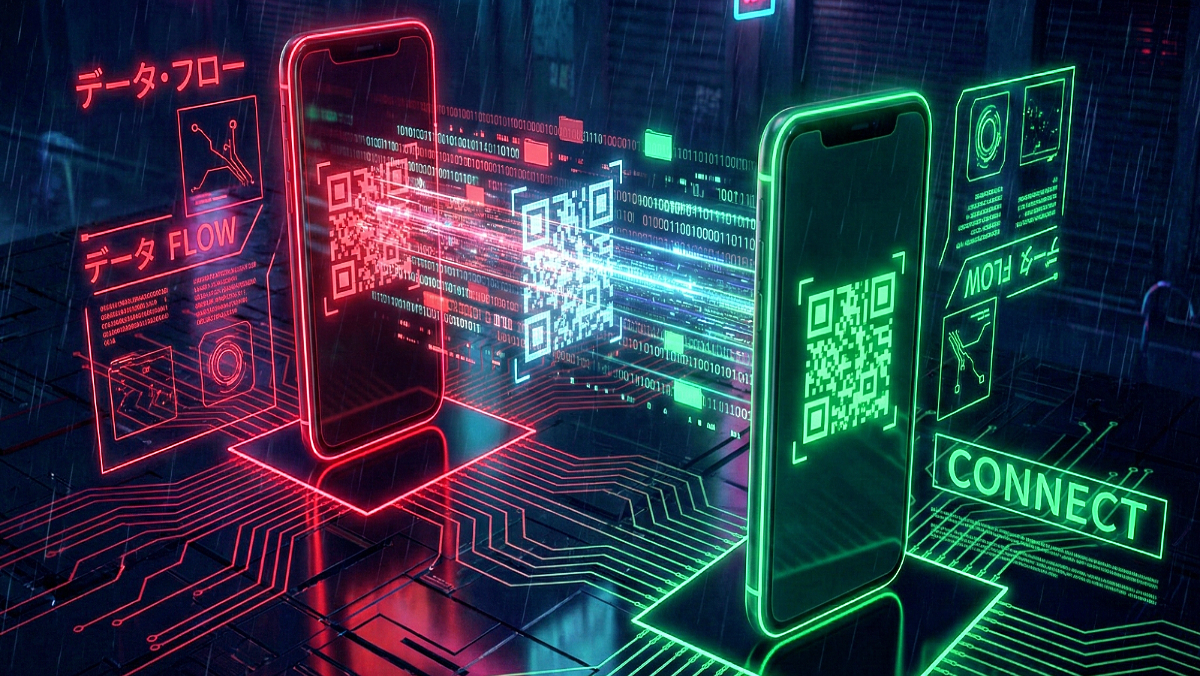
The Physics of Acoustic Ejection
Understanding how the Phone Speaker Cleaner operates requires an analysis of fluid dynamics and resonant frequencies. When a mobile device is submerged, water enters the speaker's acoustic chamber. Due to surface tension and the microscopic nature of the speaker grill ports, this water becomes "locked" in place. Standard audio cannot displace this mass because the vibration lacks the necessary kinetic force.
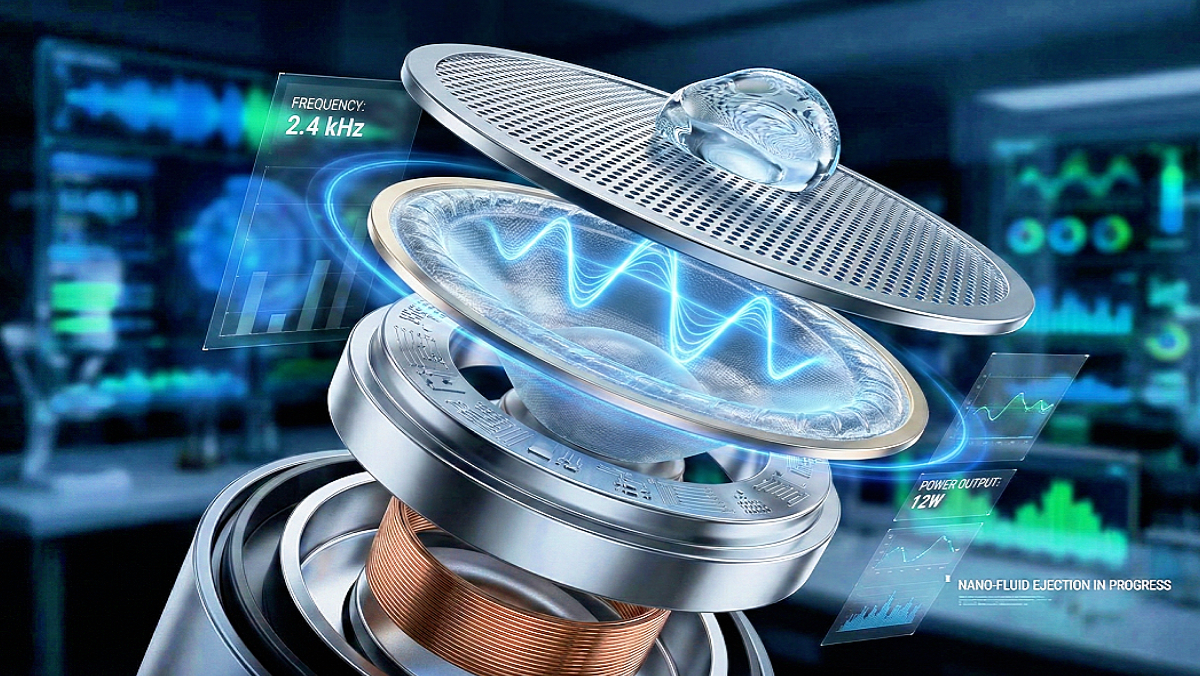
Frequency Resonance Theory
Every mechanical diaphragm has a resonant frequency. Our primary 165Hz Sine Wave is engineered to match the mechanical resonance of modern micro-speakers found in flagship smartphones. By vibrating the diaphragm at its resonant peak, we create a high-pressure air cushion behind the water. This pressure overcomes the surface tension, physically forcing droplets through the mesh holes at high velocity.
Moreover, we utilize Cymatic displacement. This is the study of visible sound and vibration. By alternating between 165Hz and 200Hz, we create "sonic nodes" that push moisture from the center of the speaker cone toward the edges, where it can be safely expelled without draining back into the internal motherboard components.
Smartphone Recovery Protocols
Not all speakers are created equal. High-end devices like the Samsung S24 Ultra or iPhone 16 Pro use specialized waterproof membranes. However, once water is trapped outside that membrane but inside the grill, audio quality drops by up to 80%.
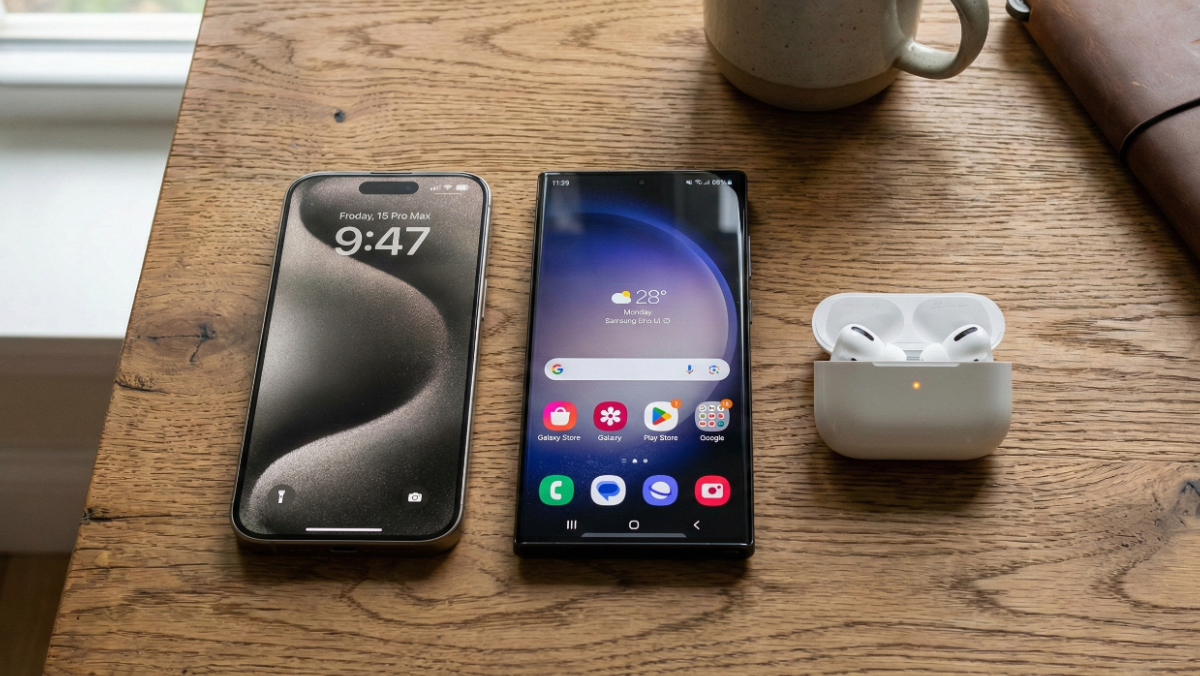
iPhone "Water Eject" Optimization
Apple’s acoustic design relies on a vertical chamber. For best results, we recommend using the Apple 165Hz Mode while holding the phone vertically. Gravity acts as a secondary force, assisting the sonic waves in pulling the water down through the bottom ports. Avoid using high-heat hair dryers, as this can melt the IP68-rated adhesive seals.
Android and Stereo Speaker Arrays
Many Android devices utilize a "dual-fire" system where the top earpiece acts as a second speaker. Our Isolation Diagnostics allow you to test the Left and Right channels independently. If your top speaker sounds tinny after rain exposure, run the Treble 12kHz diagnostic. This ultra-high frequency creates rapid, micro-vibrations capable of clearing fine mist from the smaller earpiece mesh.
Combatting Permanent Audio Decay
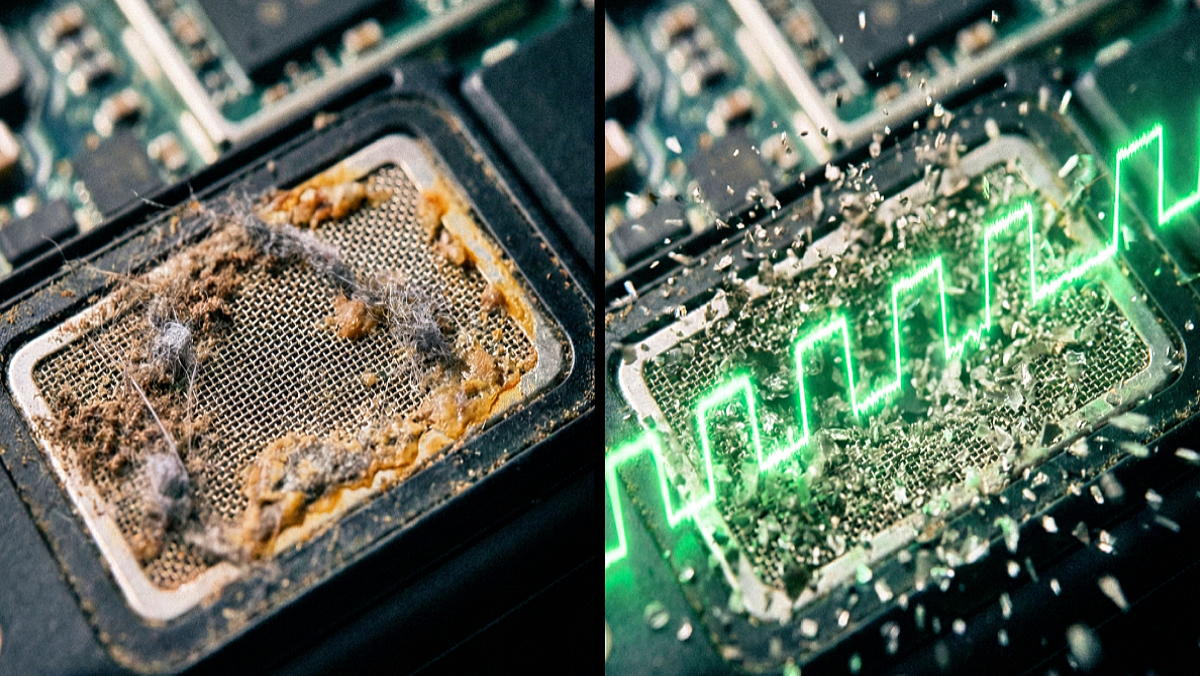
While water is a sudden threat, Dust and Micro-particles are the "silent killers" of mobile audio. Over time, pocket lint, skin oils, and atmospheric dust accumulate in the speaker grill. This creates a solid "crust" that muffles sound and can eventually cause the speaker coil to overheat and fail.
The Sonic Shake Methodology
Our Dust-Shake 60Hz mode uses a low-frequency square wave. Unlike sine waves, square waves have a "harder" impact on the speaker diaphragm, acting like a tiny hammer. This physical jarring breaks apart the dust crust, allowing the 1kHz "Final" mode to blow the particles out of the device. We recommend a "Deep Clean" cycle once every 14 days to maintain 100% audio fidelity.
Finally, we must address Hardware Safety. Using needles or toothpicks to clean speakers often results in a punctured membrane, which destroys the device's water resistance and ruins sound quality forever. The Phone Speaker Cleaner is a non-invasive, purely acoustic solution that maintains the physical integrity of your hardware while providing professional-grade cleaning results.
